
What Your Video Team Needs From You 48 Hours Before the Event
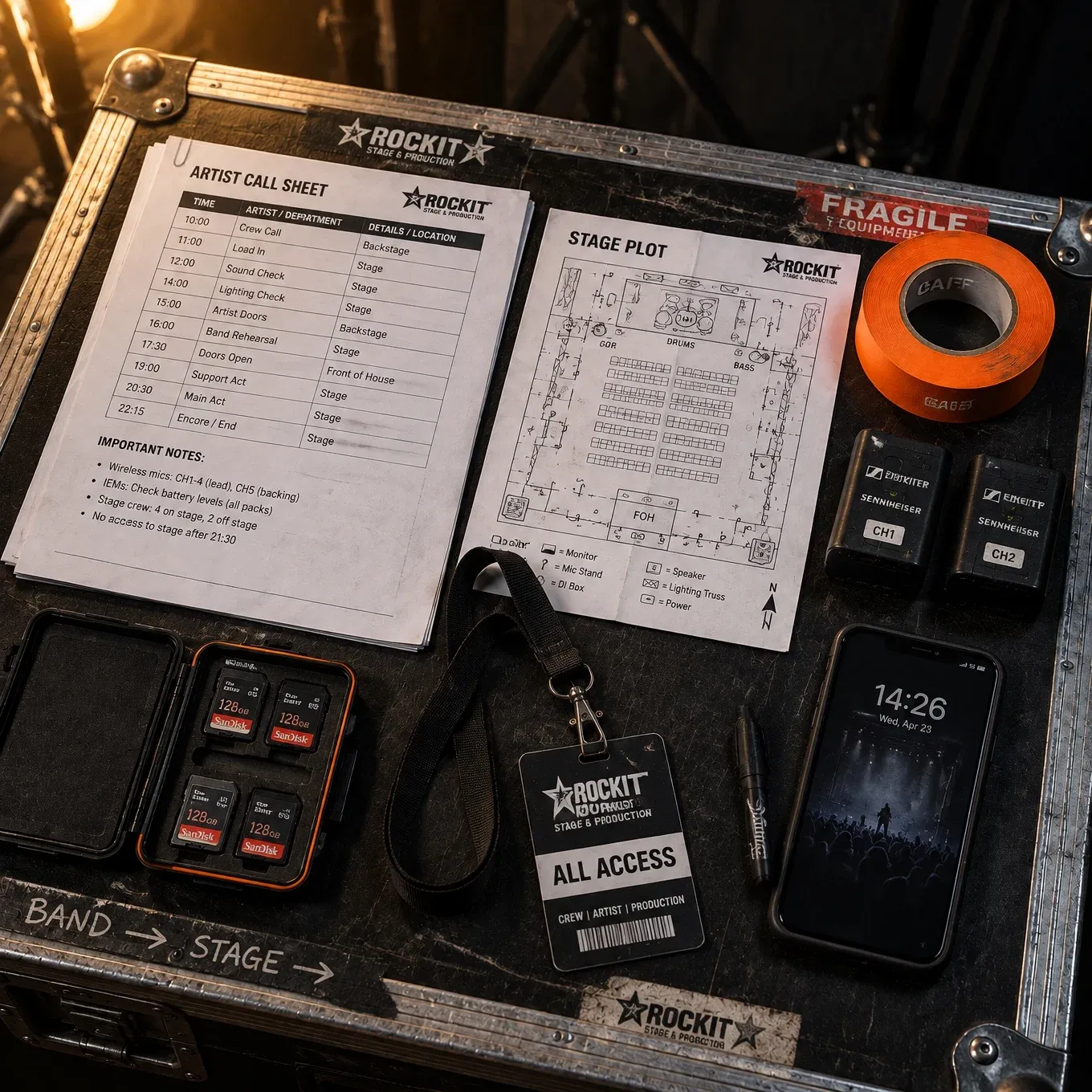
Almost every problem on an event shoot traces back to something the crew did not know two days earlier. Not a camera failure, not a creative disagreement — an information gap. The generator that was not switched on until 9am. The keynote that moved forward by forty minutes. The chief guest’s name spelled two different ways in two different documents.
By the time anyone is standing at the venue on event morning, the decisions that shape the video have already been made: which crew is booked, what is in the van, where the cameras are going to sit. This is about the window where those decisions are still cheap to change — the 48 hours before your event.
Why 48 hours, and not the morning of
Two days out is the last point at which new information can still change the plan without costing you something. Before that, we can re-book crew, swap a lens, add a camera, arrange a permission, do a recce. After that, we are improvising on your budget.
This gets sharper in peak season. Between October and April in Jaipur, the same operators and the same camera bodies are committed across several jobs in the same week. There is no spare kit sitting in the office waiting for a Thursday-night request — if your event needs a second camera, that decision has to happen while there is still a second camera to assign.
The short version: your 48-hour event video checklist
If you send nothing else, send these six things:
The run sheet is worth more than the brief
A creative brief tells us what you want the video to feel like. A run sheet tells us whether that is physically possible in the room you have booked. We need the second one more.
What we are reading it for: when the venue opens, when the first thing worth filming actually happens, how long the gaps are, and where the moments are that cannot be repeated — the ribbon cutting, the award handover, the one minute the chairman is on stage. Those are the moments every camera has to already be in position for, because there is no second take.
And we need the honest version of the timings, including the parts everyone privately knows will run late. A schedule that says the lamp lighting is at 10:00 when it has never once started before 10:45 is worse than no schedule at all, because it decides where an operator stands for forty-five minutes.
If the schedule changes after you send it — and it will — send the change. Even at 11pm the night before. A changed timing we know about is a logistics problem. A changed timing we do not know about is a missing shot.
The venue details nobody thinks to send
- Load-in time. When can the crew actually get inside, not when does the event start. A multicam setup needs two to three hours before doors, and that time has to be agreed with the venue, not assumed.
- A site contact who actually knows the show flow. Not just someone with keys, and not the event manager who will be flat out on the day. We need the person who knows what happens when, in what order, and where in the room it happens. That is what lets us change the equipment to cover it properly — a longer lens for an entry from the back of the hall, an extra light for a handover that has moved to the far end, a camera repositioned before the moment rather than after it.
- Power. How many points, where they are, and whether they are live from load-in or only at showtime. This is not a technicality — it decides where a camera can physically stand. A camera has to reach power safely, and any cable crossing a guest walkway either gets taped down properly or does not get run at all. Knowing the layout two days out means camera positions are planned around it, instead of a cable run being improvised in a dark, crowded hall.
- Internet. For a live stream, we need a wired line and its real upload speed, not a promise. Venue wifi shared with three hundred guests is not an internet connection.
- Where we can and cannot rig. Whether a tripod can sit at back centre, whether anything can be taped to the floor, whether a light stand is allowed near an exit. Venues have firm opinions about all three, and it is better to hear them now than at 9am on the day.
- Light. An honest description of the room, or two phone photos taken at the time of day you are shooting. A hall with mixed LED wash and a bright window behind the stage is a solvable problem with two days of notice, and a lighting problem without it.
The people
Three lists, and they are short.
Who must be in the video. Names, and ideally a way to recognise them — a photo, or even “the one in the blue jacket, front row.” A camera operator cannot pick your MD out of a crowd of four hundred people, and the moment you actually wanted is usually over in ten seconds.
Who must not be filmed. Some guests, some sponsors, some rooms. Far easier to hear before the shoot than after the edit.
The names as they should appear on screen. Correct spellings and designations, from one source, signed off by one person. Nearly every event we have covered produced at least one name spelled two different ways across the invite, the backdrop and the WhatsApp group. Pick the right version now, or pay for lower thirds to be redone later.
One more, and it is the most useful: name a single person on site who can make a call. A shoot with three people giving different instructions produces footage that serves none of them.
What you actually want out of it
The deliverables list needs to be locked before the shoot, not after — because it changes what gets filmed on the day, not just what gets edited afterwards.
- How many videos, and what each one is for. A three-minute highlight film, ten reels and a sponsor thank-you are three different shot lists, not one shoot with three exports. Each deliverable carries its own pacing and music decisions, which is also why each one adds to the cost — more on that in our breakdown of what a corporate video actually costs in Jaipur.
- Aspect ratios and destination. Vertical for Instagram and horizontal for YouTube are framed differently at the moment of shooting. Tell us before, and both work. Tell us after, and one of them is a crop.
- Turnaround. A same-day or next-day cut is a different production plan and a different price, because it means an editor working on site instead of a week of post.
- Brand assets. Logo files (vector if you have them), fonts, colour codes, and any sponsor logos in the order they need to appear. Chasing a logo after the edit is finished is a genuinely common reason for a delivery slipping by days.
- Music. We share the proposed track before editing starts so you can approve or reject it upfront. Changing the music after the cut exists means re-cutting the whole video to a new beat, and that is billable. If you have your own licensed track, send it now.
Live stream or same-day edit? Move your deadline earlier
Both of these need more information, sooner. For a live stream we need the destination and working access to it, a wired line we can test, and a technical contact at the venue — ideally a full day before, so the whole chain gets tested while there is still time to fix what fails. Streams do not fail at the camera. They fail at the network, and the network is the one thing we do not own.
For a same-day edit, everything the edit will need has to exist before the event starts: logos, titles, sponsor slates, an approved music track, and a precise definition of the deliverable. An editor cutting live cannot also be chasing a logo file.
What you should get back from us in the same window
This runs both ways. Two days out, your production team should have sent you:
- The crew size and names, so you can arrange passes and food
- Vehicle and parking requirements
- A gear list, if the venue needs one declared
- The load-in time we are planning for
- The mobile number of the person leading the shoot on the day
If you have not received that by 48 hours out, ask for it. It is a reasonable thing to expect from anyone covering your event.
What late information actually costs
Not theoretical. These are the ordinary, repeatable consequences:
- A stage position changed on the morning means camera positions rebuilt in the twenty minutes before doors — twenty minutes not spent shooting b-roll you will miss later.
- A second camera requested the night before is often simply unavailable in peak season, at any price.
- Names supplied after the edit is done means lower thirds redone and a second round of exports, and your delivery date moves.
- Music changed after approval means the entire video re-cut to a new rhythm, and that is a chargeable re-edit.
- A permission nobody arranged means the crew held at the gate during exactly the part of the day you most wanted on camera.
The bottom line
None of this is paperwork for its own sake. Every item on this list changes where a camera is standing or what it is pointed at. Two days out, all of it is cheap to fix. On the day, most of it is not fixable at all.
If you have an event coming up and want to work through this properly, take a look at how we handle event coverage and videography in Jaipur, or get in touch and we will send you the checklist for your specific event.